

Annie Wenstrup


Alumni and Donor Relations Coordinator, Indigenous Nations Poets
Annie Wenstrup (Dena’ina) lives in Fairbanks Alaska with her family. She is a Smithsonian Arctic Studies Fellow, an Inaugural Indigenous Nations Poetry Fellow, and an Inuit Art Quarterly Fellow. Her work can be found or is forthcoming in Alaska Quarterly Review, Ecotone, Nimrod, Palette, Poetry, Poetry Northwest, and Ran Off with the Star Bassoon.
Poems for a Tattered Planet
A series of poetic films by Indigenous Nations Poets and Overpass Light Brigade created at our 2023 mentoring retreat in Door County Wisconsin.
Publications

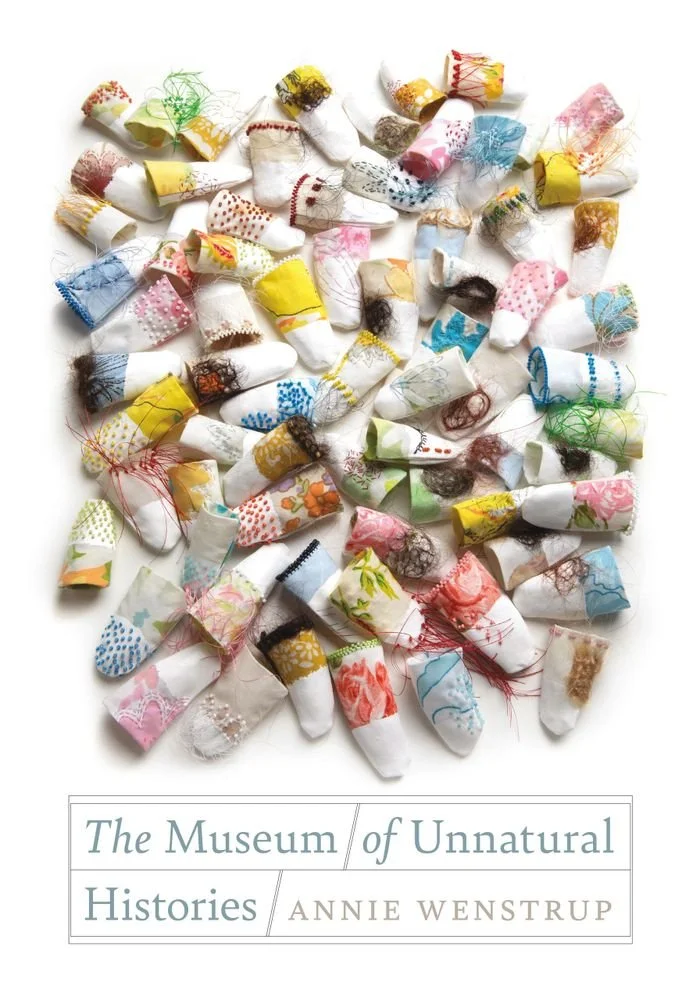
The Museum of Unnatural Histories
Genre: Poetry
Publisher: Wesleyan Poetry Series
Publication Date: March 2025
Archiving stories of dissonance and curating connection inside the imagined museum
This extraordinary debut poetry collection by Dena'ina poet Annie Wenstrup delicately parses personal history in the space of an imagined museum. Meticulously refined and delicately crafted, Wenstrup's poems weave together the lived experiences of an Alaskan Native person and the histories of unresolved colonial violence in "an authorial reckoning//with what remains." Outside the Museum of Unnatural Histories Ggugguyni, the Dena'ina Raven, and The Museum Curator collect discarded French fries, earrings, and secrets—or as The Curator explains, together they curate moments of cataclysm. Inside the museum, their collection is displayed in installations that depict the imagined Indigenous body. Every artifact contains competing stories, while some display cases are left empty.
Into this "distance between the learning and the telling," Wenstrup inserts The Curator and her sukdu'a, her own interpretive text. There, The Curator questions the space between her familial history and colonial constructs of authenticity. In particular, the poems explore how women experience embodiment when they are seen through filters of race, gender, and class: "Always, I've known I embody that which harms me." At the heart of the sukdu'a is the desire to find a form that allows the speaker's story to be heard.
Through love letters, received forms, and found text, the poems reclaim their right to interpret, reinvent, and even disregard artifacts of their own mythos to imagine a future that exists despite the series of disasters and apocalypses documented inside the museum. Eventually it begins to dawn on us that this museum may not be separable from the world, and that there may be no exit from its unnatural histories, composed of beauty and foil wrappers, wilderness and contaminated waters. Here, it is up to each one to "decide/who you must become."
